Our History
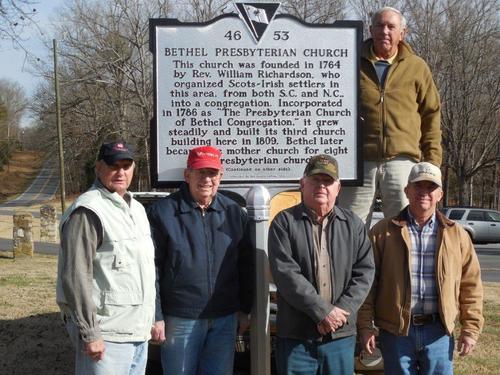
Bethel Church Organized in 1764
Organized in 1764, Bethel is one of the oldest churches in the region, and is the mother church of many neighboring congregations. In a world that now measures time in nanoseconds, Bethel has been a cornerstone of this community for more than 250 years.
By The Year 1750 Scotch-Irish Presbyterians Came To Settle The Carolinas
The congregation of Bethel Presbyterian Church claim the Scotch-Irish as their descent. By 1750, a stream of Scotch-Irish began to flow into North Carolina and the Upcountry of South Carolina. Historically, the Scotch-Irish Presbyterians were noted for their religious beliefs. Their spirit of determination and dependence upon God's help allowed for the positive development of the American nation.
The Beginnings
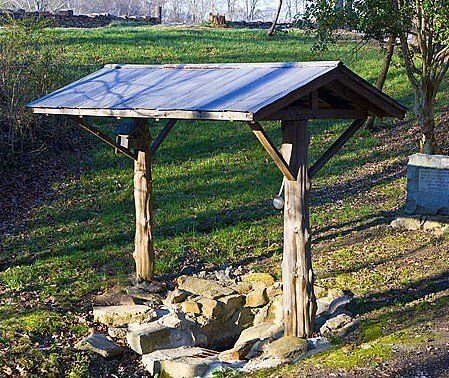
Bethel Presbyterian Church was organized in 1764 by Rev. William Richardson, minister at Old Waxhaw Presbyterian Church in Lancaster County. A committee of Andrew Floyd, Adam Baird, and Colonel Samuel Watson selected the site by meeting at a spring near the center of the congregation’s twenty-square-mile boundary. The location was scenic, central, and well-watered.
The first and second buildings are undocumented, but the third was built between 1801 and 1811, and the fourth—still standing—was erected in 1873. Known as the 'Bethel Meeting House,' it became a landmark. Rev. Richardson’s first sermon inspired the congregation with Genesis 28: 'This is none other than the house of God; This is the gate of Heaven.'
Early elders included David Watson, John Jordan, George Devinny, John Gullick, Thomas Neel, and James Campbell. Many served in the Revolutionary War, including Colonel Samuel Watson, who hosted a Whig commissary at his plantation and helped frame South Carolina’s first constitution. Colonel William Hill’s Ironworks was burned by the British, and Watson’s land became a center of resistance.
Thomas Neel, a Revolutionary War hero, lost three sons in the war and his wife Jean Spratt Neel was scalped by Shawnee Indians. Colonel Watson’s grandson, Rev. Samuel Lytle Watson, later pastored Bethel for 42 years.
Bethel was incorporated on March 22, 1786, as 'The Presbyterian Church of Bethel Congregation.'
Bethel men have served in every major American war. Fifty-two served in World War II with only one casualty, Ernest L. Flanagan. The church’s witness has remained strong, producing 25 full-time Christian workers and planting eight area churches.
On July 1, 1973, Bethel voted unanimously to leave the PCUS and join the newly formed Presbyterian Church in America (PCA), affirming its commitment to biblical mission and doctrine.
As we reflect on Bethel’s heritage, we recognize that our lives are shaped by those who came before us. We reach toward Heaven standing on their shoulders.
Bethel Pastors And The Years They Faithfully Served
Bethel Presbyterian Church has been shepherded by faithful pastors for over 250 years. Their leadership has shaped the spiritual life of the congregation and upheld the church’s commitment to biblical truth.
- Rev. Hezekiah Balch 1770–1776
- Rev. Francis Cummins 1782–1789
- Rev. George G. McWhorter 1796–1801
- Rev. James S. Adams 1811–1840
- Rev. Samuel L. Watson 1840–1882
- Rev. Robert A. Webb 1882–1887
- Rev. G.S. Robinson 1888–1890
- Rev. David S. McAllister 1891–1899
- Rev. William B. Arrowood 1899–1909
- Rev. Robert Adams 1910–1914
- Rev. R.K. Timmons 1914–1916
- Rev. George W. Nickell 1917–1924
- Rev. A.H. Key 1925–1933
- Dr. Tilden Scherer 1934–1950
- Rev. David Coblentz 1951–1961
- Rev. Kenneth Ingelby Newman 1962–1966
- Rev. James L. Moss 1967–1971
- Rev. Vernon N. West 1972–1986
- Rev. John A. Gess 1986–2015
- Rev. J. Marcus Van Vlake 2015–2023
- Rev. Christopher Donnelly 2024–present